
Hair loss and changes to hair strength and shine are very common in peri-post menopause, and going forwards it is as ‘normal’ to loose some hair as it is to gain wrinkles. Dramatic hair loss is different and can be really upsetting, but it can often be helped, and if we dig deep to find out the root cause this may give us a valuable opportunity to support our overall health.
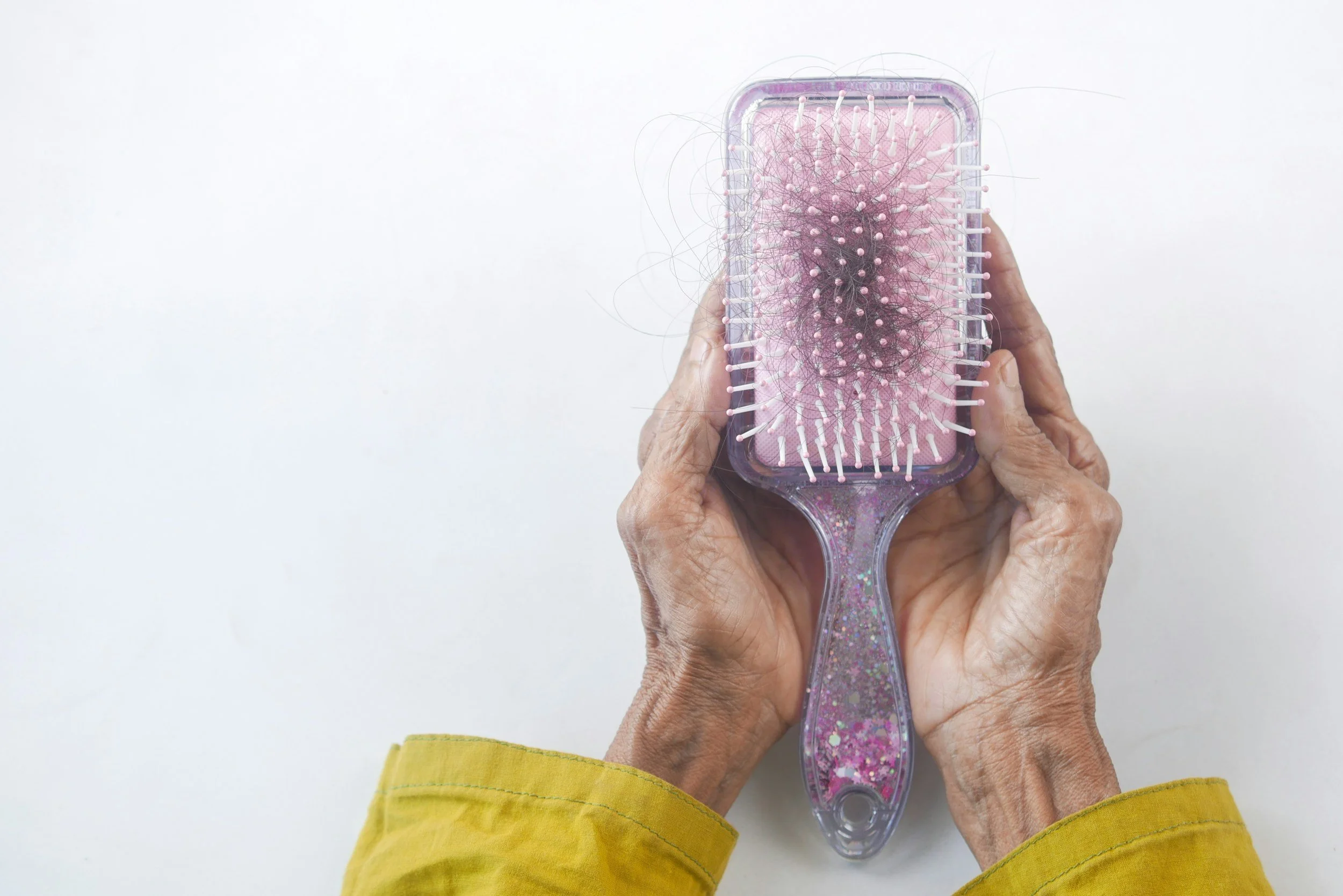
During the menopause transition, hair loss can be linked to lower estrogen levels (probably in later peri-post menopause) as estrogen helps to make all of us hydrated, juicy if you will- and that includes hair, skin and nails. Drinking plenty of water is crucial, as is great nutrition . Lower estrogen levels naturally go along with us aging and this applies to hair follicles, just as it does for our skin cells, making them shrink so hair gets finer, and we have less follicles as we age, a double whammy if you will!
Hair is made of a type of protein called Keratin, to produce abundant keratin, we need to eat well, especially foods that contain, protein, biotin, iron, antioxidants like vitamin C, niacin and zinc. There are so many nutrients involved in the process that it is a no brainer to make sure that you are upping your nutrition ‘game’ during peri-post menopause. Put good habits in place now and reap the benefits going forward. Getting blood tests done is the best way to find out if you are low in particular nutrients. So if any of the following strike a chord get on to your health provider.
Possible causes:
Low Iron levels.
If you don’t consume red meat very often, and aren’t consciously making up for it with heaps of greens and other iron rich foods you may well be low in iron. Vegetarians and vegans need to be extra careful to get enough. Low levels can also show up in low mood, low energy, breathlessness, dizziness, and easy bruising. The heavy bleeds that often occur as progesterone levels fall in perimenopause contribute to this so it's not uncommon. Don't wait to get checked. And, even if you are low and prescribed a course of Iron tablets, also make a conscious decision to add more iron rich foods into your diet going forwards. (Always have a good source of vitamin C with vegetarian sources of Iron to aid absorption).
Relative androgen excess (relative to the lower progesterone and estrogen levels that will occur in our 40’s and 50’s) can cause hair to grow on the top lip and under the chin - and fall out of the scalp. Often towards the front of the scalp, and temples. Eating phytoestrogens can help. It is also important to maintain good levels of sex hormone binding gobuiln- SHBG, by tackling insulin resistance which makes androgen excess worse, (and visa versa). Low levels of SHBG can be linked to thyroid problems, (hypothyroidism) so it’s best to get checked out, and reverse insulin resistance through diet and lifestyle.
Also eat a diet rich in zinc. Zinc has many benefits and it helps the body cope with excess androgens and nourishes hair follicles. Supplement with 8mg a day if not getting enough through the diet.
B vitamins are also very important, low biotin (Vit B7 or Vitamin H) levels have been found to impact hair quality and growth. But supplementing with biotin shouldn’t be necessary when you are eating a really healthy diet.
Talking of supplements, there are so many on the market that i’m not going to go there. Nothing makes up for the benefits of a really good diet (eww I hate that word) and in my experience, people take a supplement for a few months then stop and are back to square one. If you are vegetarian and can’t eat nuts some zinc is a good idea, and B vitamins maybe. Its so personal I don’t want to generalise. Collagen is helping some women, (it is a source of amino acids which help to build keratin) but i’d stick my neck out and guess that they probably aren’t eating enough protein to start with. (read all about Collagen here)
Smoking and alcohol deplete us of nutrients, and dehydrate us. It's never too late to stop smoking and reduce or stop alcohol consumption. Practically every menopause symptom will be made worse with alcohol, which is also a class one carcinogen- incase you need another reason to change things up, get some help or just garner some self discipline… And yes, I know its a loaded subject, don’t hate me!
This really is the time to show ourselves a lot of love, respect our bodies and look at meaningful self care. Too much emphasis it put on how we look, instead of thinking about how we can keep energetic and strong into old age, don’t wait for a big problem before you act.
Make sure you are nurturing yourself with enough high quality food, tackling stress, moving in ways that bring you joy. Everything else will follow!